
Stellic provides an intuitive design for advisors and students to plan and track their academic progress. Here are helpful overviews for features and functions within the Stellic platform.
Quick links to Training Topics:
The Official audit shows any programs that the student has officially declared within the student information system (MyBlue). It also displays any courses that have been completed and any courses that the student has enrolled in for a future term in MyBlue.
The Planned audit shows any programs that the student has officially or unofficially added to their student plan. It will also display any courses that the student has completed, registered for, or added to their planner for future terms.
When reviewing a student's audit, toggle back and forth between a student's official and planned audit by selecting the appropriate option. The option that has been actively selected appears in a darker shade.
When viewing a student's audit, the default view will be the Official view.
Tip: Please pay attention to which audit type you are viewing when reviewing and advising as Official and Planned will not always provide the same information.

Stellic uses a variety of icons and colors to indicate the status of courses and requirements throughout a student's audit.
Color Coding: Green indicates a course or requirement has been satisfied. Dark Orange indicates a course or requirement is in progress. Light Orange indicates a course or requirement has been selected as planned.
Tip: When reviewing an audit, hover the cursor over an icon and an explanation of that icon or how it is being used will appear. This is helpful when interpreting the status of courses and requirements.
| Icon | Description |
 |
A course or requirement has been satisfied. |
 |
A course or requirement is in progress. |
 |
A registered course in a future term, or a requirement with a future registered course. |
 |
A planned course, or requirement being satisfied with a planned course. |
 |
A remaining course or requirement; a number will appear in the box indicating the specific number of remaining credit hours. |
 |
A completed milestone. |
 |
A milestone that will be satisfied by a registered course. |
 |
A remaining milestone. |
 |
A planned milestone. |
Additional Icons: To provide more insight into how courses are being applied, additional Icons will be placed on the right side of a course or requirement heading.
| Icon | Description |
 |
Course is counting toward multiple requirements. |
 |
Course is being used as a equivalent to the required course. |
 |
Additional information that requires attention. Examples: Course taken but grade requirement was not met, or course is not being counted due to overlap/duplication. |
 |
Course is fulfilling a parent requirement and may appear in multiple locations. |
Examples of common progress icons usage:
Course Equivalency, TE 218 has an equivalency to TE 318 and is being double counted. By hovering the cursor over the  icon, and explaining will appear. The course is also in progress as indicated by the
  icon.
icon.

Course Planned, BIOL 103 is in the planned audit for Spring 27. The light orange icons are only available in the planned audit version.
Requires Attention, CYBR 304 is not being counted for the students requirement as they need to earn a C or higher.
Registered for Future Term, the student has registered for ART 100 in a future semester. The course is also satisfying more than one requirement.

Remaining required course,
Milestone registered, Milestones that will be satisfied by courses a student has registered for.

A student's degree audit can be viewed in a variety of ways. On the right-hand side of the audit version section, the following viewing options are available, Audit in Full, Compact, Remaining, Expanded, All Remaining.
Tip: To review a student's remaining requirements that include program and institutional requirements, select the "Remaining" audit view. This is only available in the official degree audit. Requirements outlined with dashed lines have multiple courses that could fulfill the requirement; requirements outlined with a solid line have a specific course that fulfills that requirement.
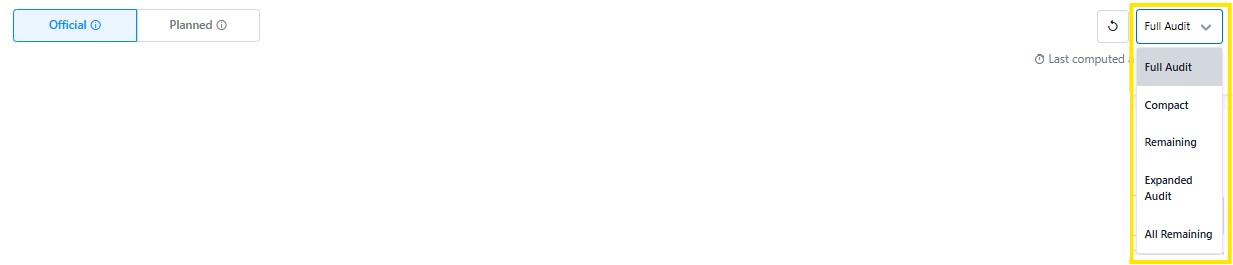
Example of Audit viewed by Remaining:
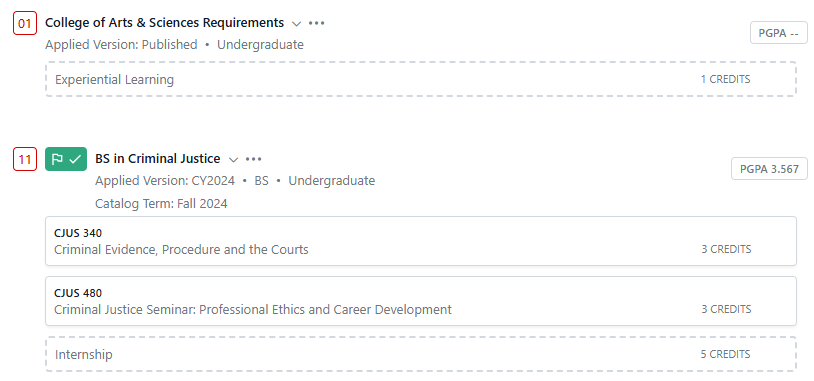
Stellic organizes student requirements into groups and implements nested formatting to view requirements. The primary requirement is the “parent” requirement, and it cannot be fulfilled unless all "child” or sub-requirements are fulfilled.
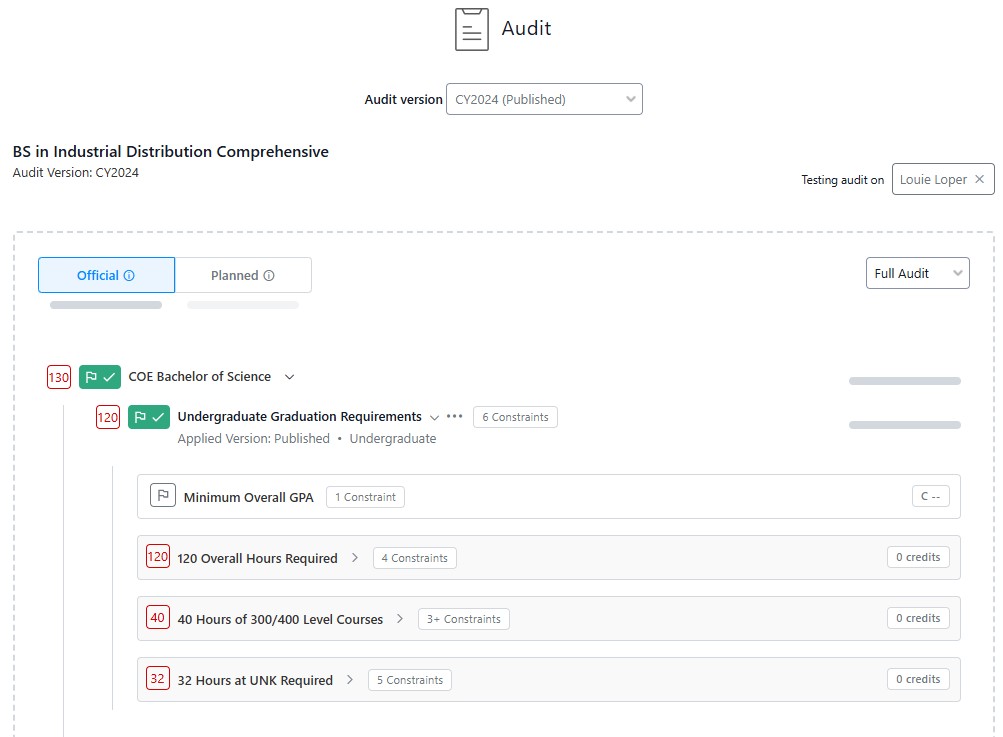
The order of requirements in the student audit begins with UNK's Institutional requirements. For Undergraduate students this includes: 2.0 Minimum Overall GPA, 120 Overall hours, 40 hours of Upper Division Level Courses (300/400) and 32 hours at UNK.
These requirements must be completed by all undergraduate students and cannot be waived or substituted. The number of credits remaining will be shown in a red box on the left, the number of credits completed will show in white on the right of the requirement.
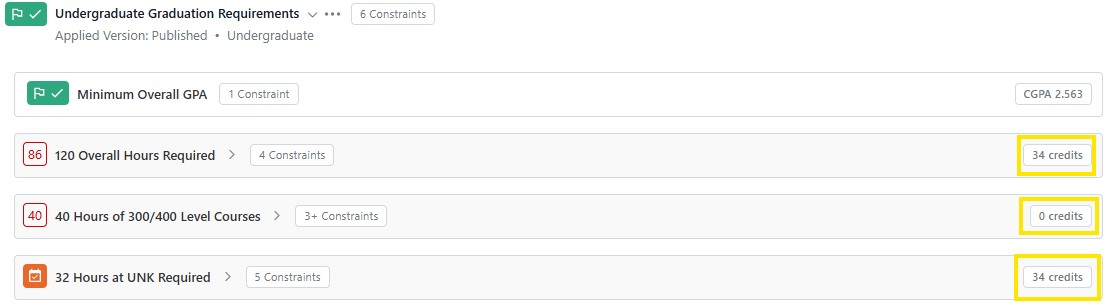
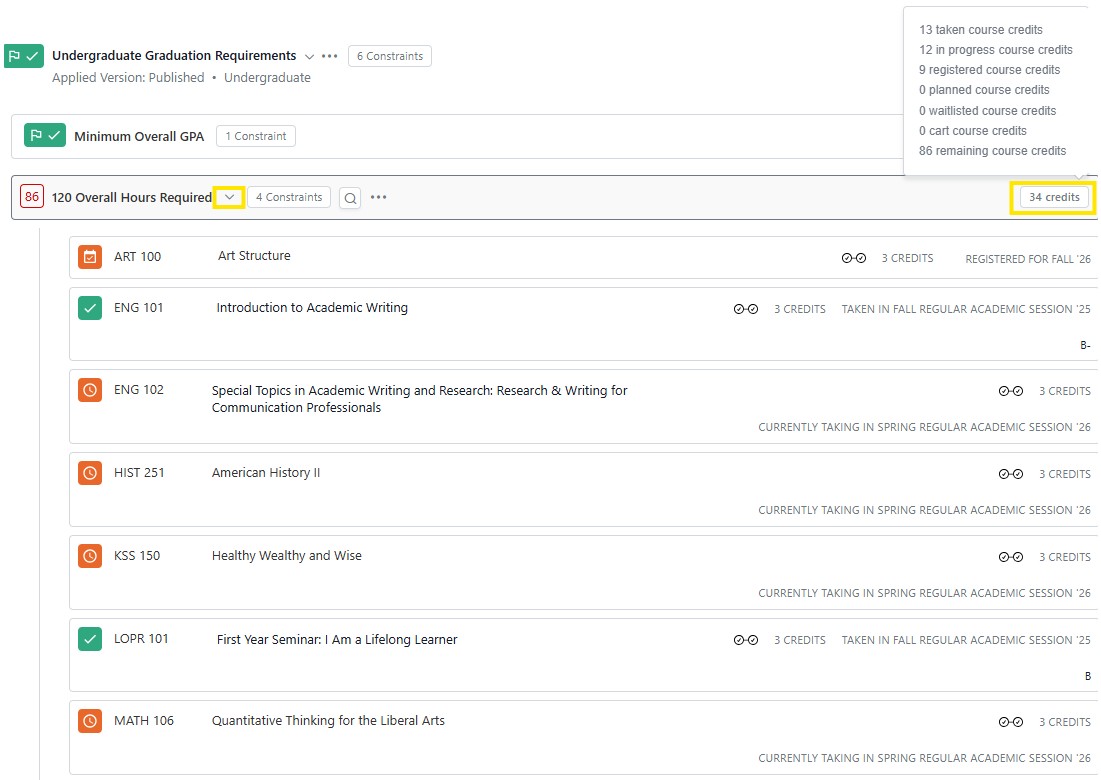
Tip:To view all the courses applying to the parent requirement click on the > icon next to the requirement heading and the courses applying to the parent requirement will be displayed. Also clicking on the total credits, a box will display which of the courses being applied to the requirement have been taken, in progress and registered for.
The next group of requirements are specific to the College where a student’s primary program is housed. The undergraduate college specific requirement include the experiential learning all undergraduate students are required to complete.
Students graduating from the College of Arts and Sciences are required to complete 1 credit of experiential learning coursework, College of Business and Technology or College of Education are required to complete 3 credits of experiential learning.
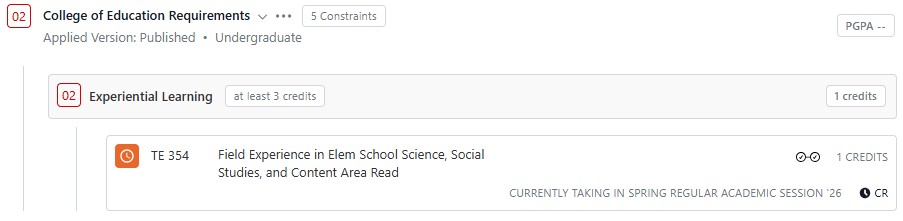
The following group of requirements are in order of primary major, second major, minors, and unmatched courses.
In a student’s primary program, the first set of requirements displayed are LOPERs General Education. In the following example, it may initially look like LOPERs 4 and 7 are missing from the list. However, in the Cyber Security BS major, it is listed in the major section and is not duplicated in the LOPERs General Education below.
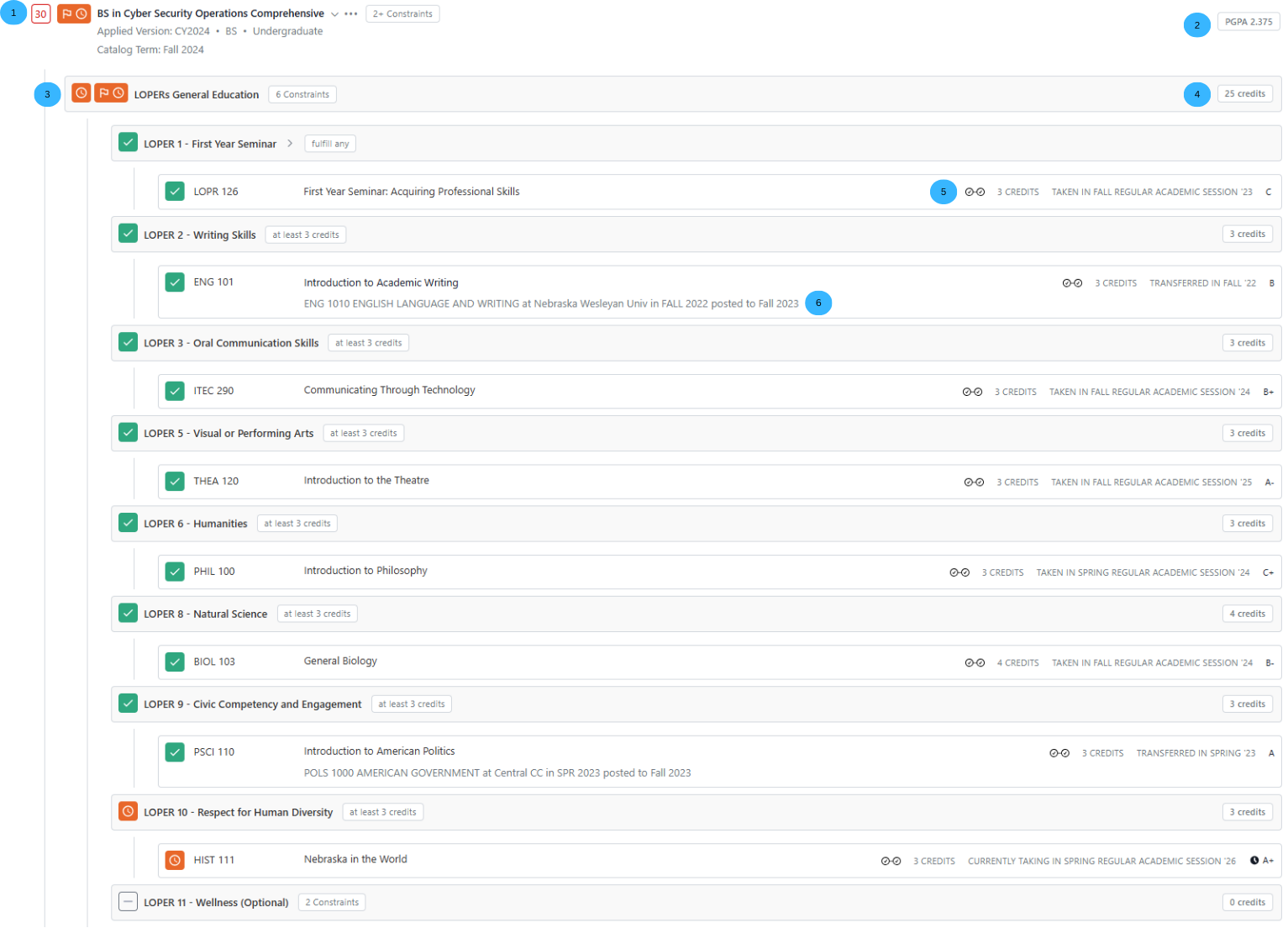
Legend: 1. Remaining credit hours in the program. 2. Program GPA 3. In progress Loper requirement & Milestone 4.Credits being applied, Note that LOPERs 4 & 7 are not being counted in this section but in the "LOPERs Required by Program" 5. Courses being applied to multiple requirements, indicated by the double check icon. 6. Transfer course example.
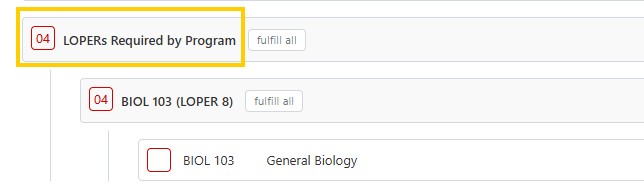
LOPERs Required by Program, LOPERs 4 and 7 are placed in the Program section of the audit instead of the LOPERs General Education section.
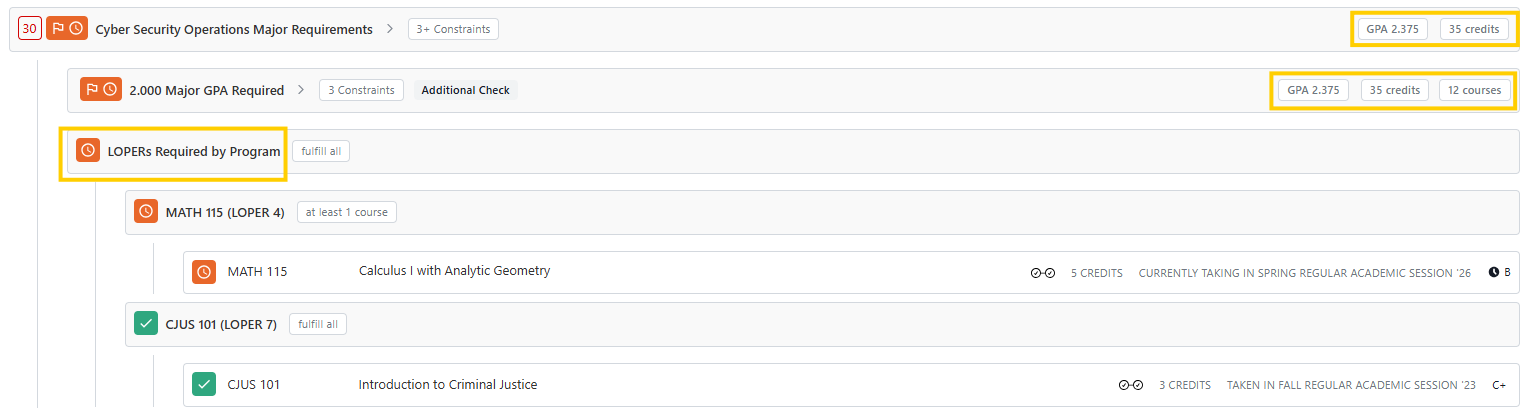
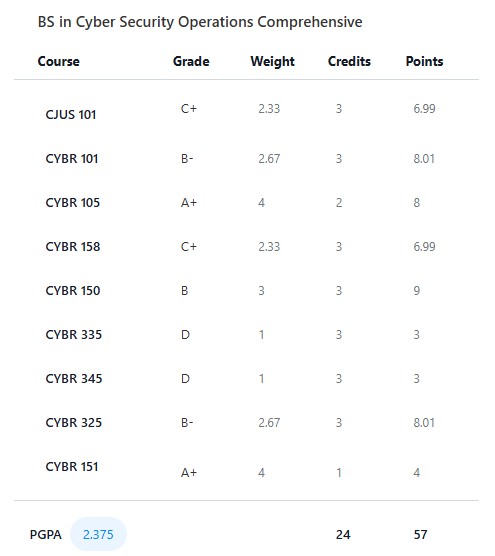
Tip: Clicking on the credit or courses icons will display a summary of courses being counted. Clicking on the GPA icon, a table will appear providing the GPA calculation.
When viewing program requirements, a box labeled “constraints” is listed next to each requirement. Constraints are the rules associated with each requirement such as fulfill all, fulfill any of the following, credits required, minimum GPA, minimum grade requirements, etc. Clicking on a Constraints box will provide a dropdown field with the specific details.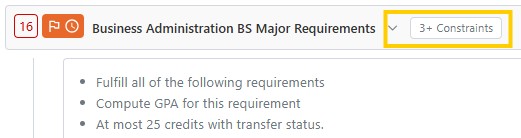
When there are multiple course options to fulfill a requirement the course options may be listed in a constraint instead of being nested below a requirement. In this case, opening the constraints box is a way to see course options available to fulfill a requirement. 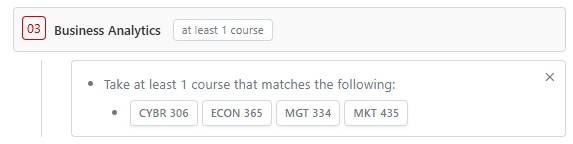
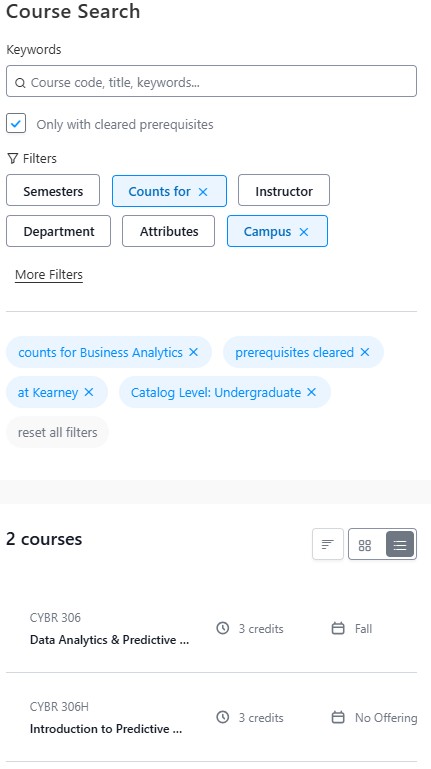
If course options are not listed, another option to view courses available to satisfy the requirement, hover the cursor over the requirement heading and click on the magnifying glass. A sidebar will appear with course options and details.
The course search will appear in the sidebar with qualifying course options. Learn more about Course Searches.
Students that are admitted as a transfer or readmit student to UNK with 18+ hours of general education coursework or 24+ of any coursework are not required to complete a LOPER 1 course. The LOPER 1 requirement will be checked off and you can click the Waived button to see that the student has the tag of “First Year Seminar Waived”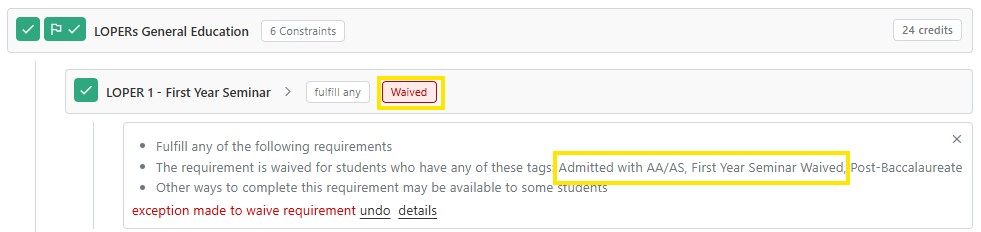
Students admitted with an Associate of Arts, Associate of Science, or a bachelor's degree from a regionally accredited institution are exempt from completing the LOPERs General Education requirements. By clicking the constraints on any of the individual LOPERs to see that this student has a tag of “Admitted with AA/AS”
Example:
Tip: Students who are exempt from LOPERs General Education requirements must still complete the LOPERs required by their major.
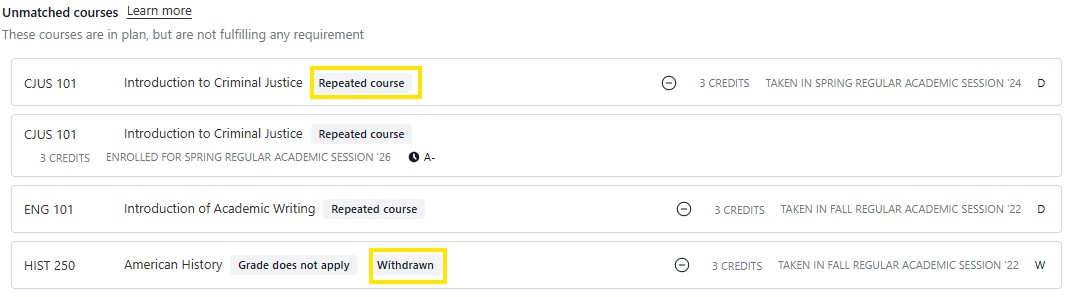
Unmatched courses are taken or completed courses that do not fulfill any requirements. Typically unmatched courses include courses where a student failed or withdrew or repeated and the second attempt was completed with a higher grade. This section is located at the bottom of a degree audit.
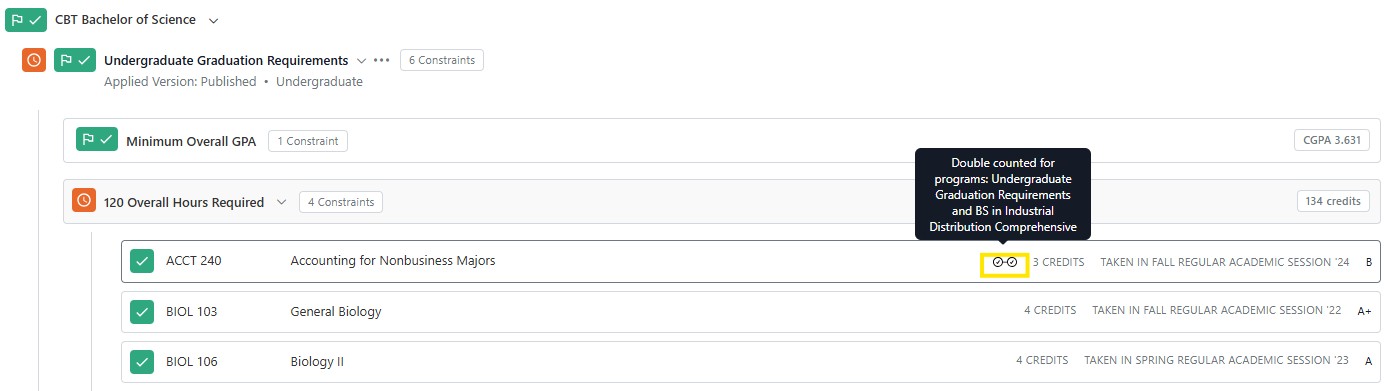
Unrestricted Electives are courses that are not applied to a major or minor, but applied to undergraduate graduation requirements. These can be viewed from the 120 Overall Hours Required Section as there is no section grouping for unrestricted electives.
In the example below, a course that has both green check & double check icon (ACCT 240) is being used to fulfill multiple requirements. Courses with a green box and checkmark (BIOL 103 & 106) are essentially unrestricted electives as they are only being used for undergraduate graduation requirements such as 120 overall hours, overall GPA, 40 hours of 300/400 level courses and 32 hours at UNK.
Tip: When making a course substitution request to fulfill a requirement or resolve a duplication issue this is the primary method to identify potential course substitutes.
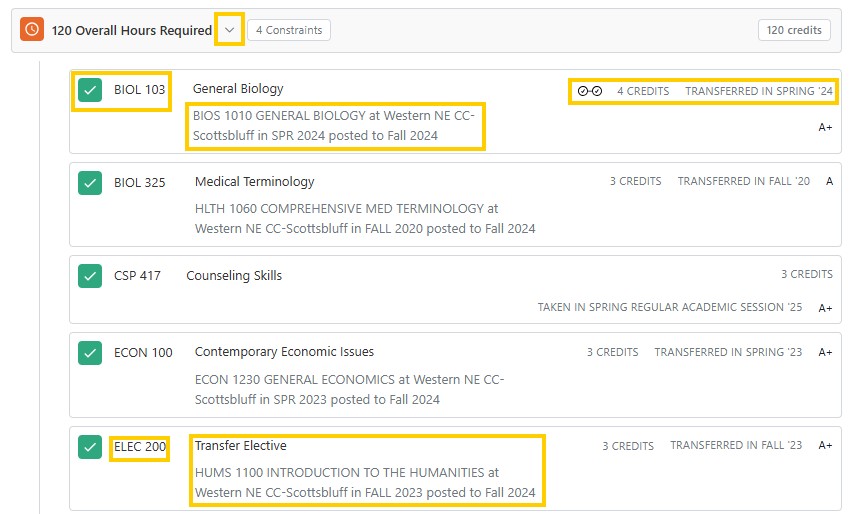
There are two methods to view transfer coursework. In the student’s progress tab, by clicking on the 120 Overall Hours Required will display a drop-down list of all courses a student has completed. Courses that have been transferred will include information such as the course name and number from that original institution. If the course has a UNK equivalency it will be indicated which UNK course it’s fulfilling. If the course has been transferred without a UNK equivalency, it will be designated as an elective and given its course level 100-400.
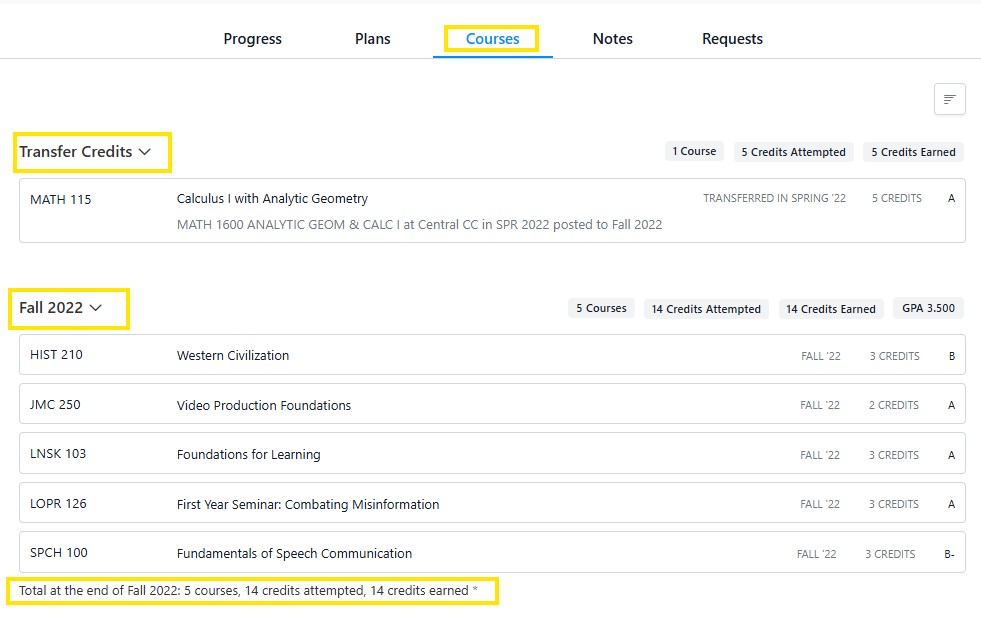
Another option to view transfer coursework is to click the Courses tab on a student, where you can view their chronological course history. Transfer coursework will be listed first, followed by a semester-by-semester view of the courses a student has completed. At the end of each semester there is a summary total of courses and credits earned.
If a UNK student is simultaneously enrolled in a course at UNO or UNL, the course is located in the Unmatched Courses section. When the course is completed it will be located in both the courses and progress tabs.
Note: A student will still need to transfer their coursework following completion courses at UNO or UNL to be applied to their UNK transcript.
Example of a in progress course from the Unmatched section of the degree audit:
 Example of course viewed from Courses tab. Notice background color which indicates in progress & transfer not yet complete.

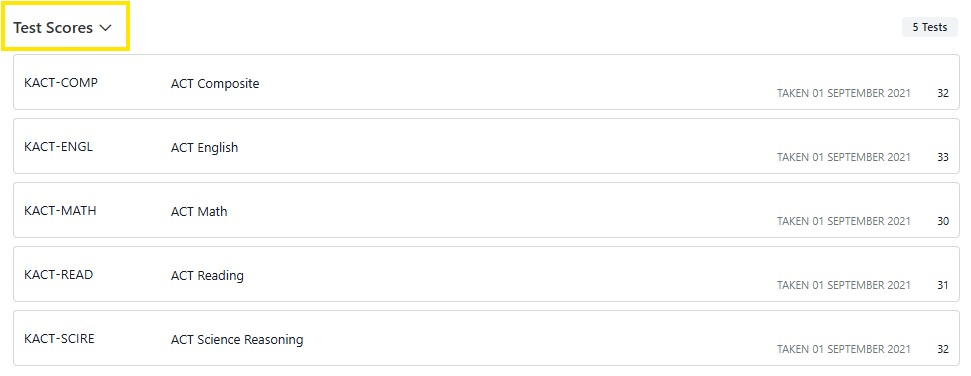
ACT & SAT: scores for some students can be viewed at the bottom of the courses tab.
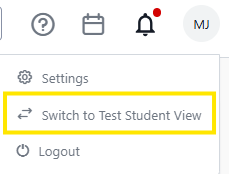
Advisors can clone/replicate a student’s view of their stellic profile. To do this, click your initials in the upper right corner of the screen and click Switch to Student Account. Enter the student’s name or NUID in the box that appears.
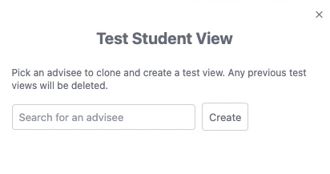

This will create a clone of the student’s view and any changes you make won’t be saved. The left panel will appear gray instead of black indicating the test instance. When viewing a student’s profile, your name and information will appear at the top instead of their own.
To return to advisor view, click the initials in the upper right corner of the screen and click Switch to Admin Account.

This feature is beneficial for advisors when a student is exploring changing their program or catalog year. To do this, navigate to the Programs tab on the left hand menu. Select a program and catalog year and enter the student's NUID number. Advisors will be able to compare the student’s current audit with the remaining requirements in the program selected.
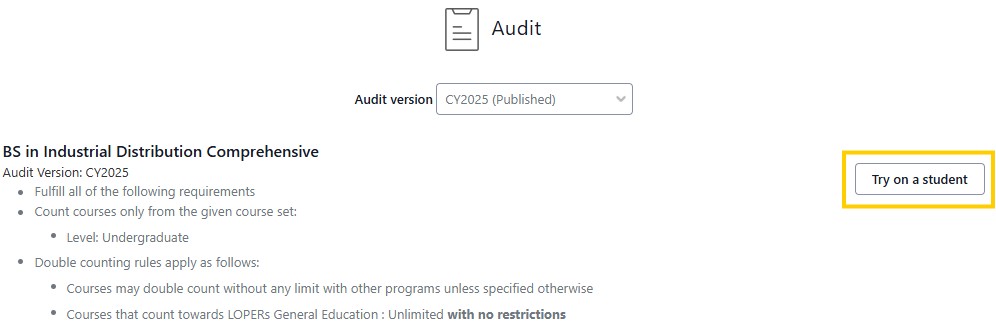
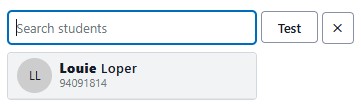
Click Try on a student button and enter in the student's name or NUID and click the Test button.
Next a full version of the student's degree audit will display. Advisors can then compare the selected program and catalog year with a student's current degree audit. This is a beneficial tool when analyzing remaining requirements before instructing a student to change programs or catalog year.